
Introduction
In Ayurveda, every person has a unique mind–body constitution known as a Prakriti, which is governed by three doshas: Vata, Pitta, and Kapha. If you have a Kapha body type, your natural qualities include strength, stability, calmness, and endurance. However, when Kapha becomes imbalanced, it can lead to weight gain, slow digestion, low energy, water retention, and sluggish metabolism.
The Kapha body type is made up of the earth and water elements, which means it tends to be heavy, cool, slow, and steady in nature. Because of this, Kapha individuals benefit from foods that are light, warm, dry, and stimulating. The right diet can help boost digestive fire (Agni), improve metabolism, and restore natural balance in the body.
In this guide, we will explain the Kapha body type diet plan in simple terms — including the best foods to eat, foods to avoid, helpful spices, lifestyle tips, and practical strategies for healthy weight loss and long-term balance. Whether you are looking to manage weight, improve digestion, or feel more energized, this Ayurvedic approach offers a natural and sustainable solution.
1. Understanding Kapha Body Type in Ayurveda: The Foundation of Your Diet Plan
Before you follow any Kapha body type diet plan, you must understand what Kapha truly represents in Ayurveda. Without clarity, even the best dietary advice will fail to create results.
Ayurveda defines Kapha as the combination of earth and water elements. Therefore, Kapha governs structure, stability, lubrication, and strength in the body. However, when Kapha increases beyond balance, it triggers weight gain, sluggish digestion, water retention, lethargy, and emotional heaviness.
Unlike Vata, which moves quickly, or Pitta, which burns intensely, Kapha moves slowly. Consequently, people with dominant Kapha dosha usually have:
- A strong, well-built body
- Smooth, soft, oily skin
- Thick hair
- Calm and patient personality
- Slow metabolism
- Tendency toward weight gain
Although Kapha types enjoy natural stamina and emotional stability, they struggle with slow digestion and accumulation. As a result, improper food choices quickly create heaviness.
Now here’s the crucial point: Kapha increases with similar qualities.
Since Kapha is heavy, cold, oily, and slow, eating heavy, cold, oily foods worsens imbalance. Therefore, a Kapha diet must introduce opposite qualities — light, warm, dry, and stimulating.
Moreover, modern lifestyle habits such as late waking, overeating, emotional eating, and sedentary work further aggravate Kapha. Therefore, diet alone cannot fix imbalance unless you also shift habits.
The Kapha body type diet plan focuses on:
- Stimulating digestion
- Reducing heaviness
- Supporting fat metabolism
- Eliminating mucus
- Increasing energy
Most importantly, you must understand that Kapha does not need excessive nourishment. Instead, Kapha needs activation and stimulation.
Once you grasp this principle, everything else becomes simple.
Now let’s move deeper into how Kapha imbalance actually shows up in daily life.
Also Read :- Ayurvedic Skincare Routine for Glowing Skin

2. Signs of Kapha Imbalance: Why Your Diet Needs Correction
First and foremost, you must identify whether Kapha dominates your body. Otherwise, you might follow the wrong diet and worsen your health.
Kapha imbalance does not appear suddenly. Instead, it builds slowly over time. However, once it accumulates, symptoms become obvious.
Physically, Kapha imbalance often shows as:
- Persistent weight gain
- Slow digestion
- Bloating
- Excess mucus
- Sinus congestion
- Oily skin
- Water retention
- Puffy face
- High cholesterol tendencies
Furthermore, digestion feels heavy after meals. You might feel sleepy, dull, or mentally foggy. Therefore, even small overeating causes discomfort.
Emotionally, Kapha imbalance leads to:
- Attachment
- Lack of motivation
- Depression
- Resistance to change
- Emotional overeating
In addition, many Kapha individuals struggle with sugar cravings. This happens because their metabolism runs slow, and they seek quick energy.
However, here is the critical issue: most Kapha types eat foods that worsen imbalance without realizing it.
For example:
- Dairy increases mucus
- Fried foods increase heaviness
- Cold drinks slow digestion
- Sweets increase fat storage
As a result, metabolism slows even more.
Therefore, correcting diet becomes non-negotiable.
If you constantly feel heavy, tired, and unmotivated despite eating “healthy,” you likely consume Kapha-aggravating foods.
Now that you recognize the symptoms, let’s understand what Kapha body type actually needs nutritionally.
Also Read :- Therefore, correcting diet becomes non-negotiable.
If you constantly feel heavy, tired, and unmotivated despite eating “healthy,” you likely consume Kapha-aggravating foods.
Now that you recognize the symptoms, let’s understand what Kapha body type actually needs nutritionally.
Also Read :- Ayurvedic Weight Loss Plan for Beginners
3. Core Principles of a Kapha Body Type Diet Plan
Now we reach the heart of this guide — the Kapha diet rules that create transformation.
First, remember this formula:
Opposites balance Kapha.
Since Kapha carries heavy, cold, and oily qualities, your diet must feel:
- Light
- Warm
- Dry
- Spicy
- Stimulating
Therefore, the Kapha body type diet plan emphasizes the following principles:
1. Favor Light Foods
Choose foods that digest quickly. For example:
- Steamed vegetables
- Lentils
- Barley
- Millets
- Light soups
Avoid heavy grains like white rice in excess. Instead, choose grains that reduce water retention.
2. Eat Warm Meals Only
Cold food slows Kapha digestion immediately. Therefore, avoid:
- Refrigerated leftovers
- Cold smoothies
- Ice cream
- Cold milk
Instead, consume warm, freshly cooked meals. Warmth activates agni (digestive fire).
3. Reduce Sweet, Sour, and Salty Tastes
Kapha increases with these tastes. Consequently, minimize:
- Sweets
- Dairy
- Fried snacks
- Excess salt
4. Increase Pungent, Bitter, and Astringent Tastes
These tastes reduce Kapha effectively.
For example:
- Ginger
- Black pepper
- Turmeric
- Fenugreek
- Bitter gourd
- Leafy greens
Spices become your biggest ally.
5. Practice Portion Control
Kapha types often overeat because digestion feels slow. However, overeating worsens heaviness.
Therefore, eat until 70% full.
6. Consider Light Fasting
Kapha benefits from occasional fasting or skipping dinner. This practice resets metabolism.
However, do not fast excessively without guidance.
In summary, the Kapha diet does not focus on calories. Instead, it focuses on qualities.
Next, let’s explore the best foods Kapha types should prioritize.
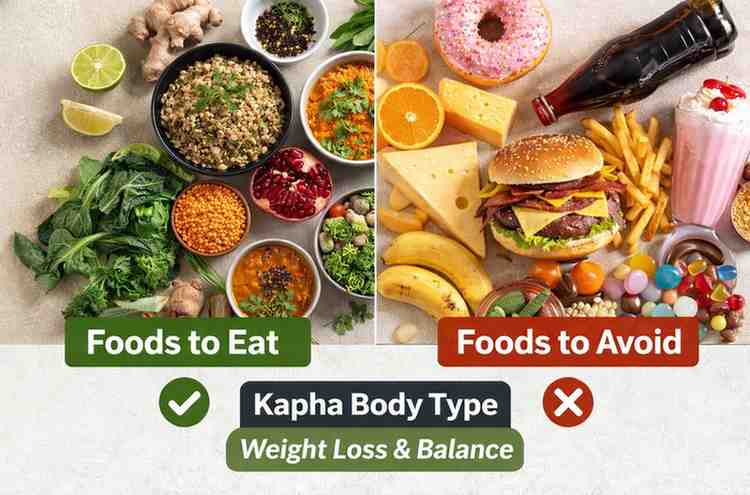
4. Best Foods for Kapha Body Type: What to Eat Daily
If you truly want to balance Kapha, you must choose foods strategically.
Let’s break this down clearly.
Grains
Choose light and dry grains such as:
- Barley
- Millet
- Quinoa
- Buckwheat
Avoid excess wheat and polished rice. These increase heaviness.
Vegetables
Vegetables form the foundation of a Kapha diet.
Best choices include:
- Leafy greens
- Cabbage
- Cauliflower
- Broccoli
- Carrots
- Bitter gourd
- Radish
However, limit starchy vegetables like potatoes and sweet potatoes.
Fruits
Kapha types should prefer light fruits.
Best options:
- Apples
- Pears
- Pomegranate
- Berries
Avoid very sweet fruits like bananas and mangoes in excess.
Proteins
Choose plant-based proteins:
- Lentils
- Chickpeas
- Mung beans
Reduce red meat. It increases heaviness.
Dairy
Minimize dairy. However, small amounts of warm spiced milk occasionally may work.
Spices
Spices transform digestion.
Use:
- Ginger
- Black pepper
- Cinnamon
- Cloves
- Mustard seeds
Spices burn excess Kapha effectively.
When you combine these foods properly, you feel lighter within weeks.
However, diet success also depends on what you eliminate. Therefore, let’s discuss foods Kapha must strictly avoid.
5. Foods to Avoid in a Kapha Body Type Diet Plan
Although many foods look healthy, they may worsen Kapha imbalance.
First and foremost, avoid heavy and oily foods.
1. Fried Foods
Pakoras, chips, and fried snacks clog digestion. Consequently, metabolism slows further.
2. Excess Dairy
Milk, cheese, curd, and ice cream increase mucus.
3. Sugary Items
Sweets directly aggravate Kapha and lead to fat storage.
4. Cold and Frozen Foods
Cold foods weaken digestive fire instantly.
5. Processed Foods
Packaged foods contain salt and sugar that increase water retention.
6. Overeating
Even healthy food becomes harmful when eaten excessively.
In addition, avoid late-night dinners. Kapha digestion slows after sunset. Therefore, heavy dinners create weight gain.
6. Ideal Morning Routine for Kapha Body Type: Start Your Metabolism Strong
Your Kapha body type diet plan does not begin with breakfast. Instead, it begins the moment you wake up. In fact, how you start your morning directly determines how efficiently your metabolism works throughout the day.
Kapha individuals naturally feel heavy and sluggish in the morning. Therefore, waking up before sunrise becomes absolutely essential. If you wake up after 7:00 AM, Kapha energy increases even more, and you feel dull and unmotivated.
First, drink a glass of warm water with ginger and lemon. This simple habit activates digestion immediately. Moreover, it flushes accumulated toxins and reduces water retention.
Next, engage in movement. Unlike Vata or Pitta types, Kapha must sweat daily. Therefore, choose:
- Brisk walking
- Surya Namaskar
- Skipping
- Jogging
- Dynamic yoga
Movement breaks stagnation. Without it, even the perfect Kapha diet plan will struggle to show results.
After exercise, eat a light breakfast only if you feel genuine hunger. Many Kapha types do not need heavy breakfast. In fact, skipping breakfast occasionally works well for them because it boosts fat metabolism.
If you eat, choose:
- Stewed apples with cinnamon
- Vegetable poha with minimal oil
- Mung dal chilla
- Herbal tea with ginger
Avoid heavy options like paratha, bread-butter, and dairy-rich meals. These slow digestion instantly.
Therefore, your morning must feel light, warm, and energizing.
When you master your mornings, Kapha imbalance reduces dramatically.
Now let’s move to the most important meal of the day for Kapha types.
Also Read :- Ayurvedic Treatment for Acidity and Gas
7. Kapha Lunch Plan: The Most Important Meal for Balance
Unlike breakfast and dinner, lunch should be your largest meal. Why? Because digestive fire peaks at midday. Therefore, your body handles food efficiently during this time.
However, even lunch must follow Kapha principles.
First, fill half your plate with vegetables. Choose steamed, sautéed, or lightly spiced vegetables such as:
- Cabbage
- Bottle gourd
- Ridge gourd
- Spinach
- Bitter gourd
- Carrots
Next, add a portion of light grains like barley, millet, or red rice in small quantity. Avoid large portions of wheat-based rotis.
Then include plant-based protein such as:
- Mung dal
- Masoor dal
- Chana dal
- Sprouts
Now here is the key difference — use spices generously. Ginger, cumin, turmeric, black pepper, coriander, and mustard seeds stimulate digestion and prevent heaviness.
However, avoid curd at lunch. Many Kapha individuals eat curd daily, but it increases mucus and weight gain.
Instead, drink warm water or cumin water.
Additionally, avoid desserts after meals. Sugar shuts down digestive fire and increases Kapha accumulation.
Most importantly, eat mindfully. Do not eat while watching TV or scrolling your phone. When you eat consciously, digestion improves automatically.
Therefore, a well-structured Kapha lunch fuels energy instead of creating sleepiness.
Now let’s discuss the lightest and most crucial meal for Kapha balance.
8. Kapha Dinner Strategy: Eat Light to Prevent Weight Gain
Dinner determines whether you wake up light or heavy.
Kapha digestion slows significantly after sunset. Therefore, heavy dinners cause:
- Weight gain
- Bloating
- Poor sleep
- Morning sluggishness
Hence, follow this simple rule:
Eat before 7:00 PM and keep dinner very light.
Best dinner options include:
- Vegetable soup
- Clear mung dal soup
- Steamed vegetables with spices
- Light khichdi (small portion)
Avoid:
- Rice-heavy meals
- Fried foods
- Sweets
- Dairy
- Non-vegetarian heavy dishes
Moreover, avoid second servings.
If you do not feel hungry, you may skip dinner occasionally. Kapha benefits from intermittent fasting when practiced wisely.
Additionally, drink herbal teas after dinner such as:
- Ginger tea
- Cinnamon tea
- Tulsi tea
These herbs support fat metabolism overnight.
When you keep dinner light, your body burns stored fat more efficiently. As a result, you wake up refreshed.
Now that daily meals are clear, let’s explore detox drinks and metabolism boosters for Kapha.
9. Kapha Detox Drinks and Metabolism Boosters
Although food plays a primary role, detox drinks accelerate Kapha balance significantly.
First, start your day with:
Ginger-Lemon-Honey Water
This combination stimulates digestion and reduces fat accumulation.
However, do not add honey to boiling water. Instead, mix raw honey into warm water only.
Second, drink cumin-coriander-fennel tea during the day. This blend improves digestion and reduces bloating.
Third, try trikatu powder (ginger, black pepper, long pepper) in small amounts under guidance. It enhances metabolism strongly.
Additionally, herbal teas such as:
- Tulsi
- Cinnamon
- Cardamom
help reduce Kapha heaviness.
However, avoid packaged detox juices. They often contain sugar and worsen imbalance.
Most importantly, sip warm water throughout the day. Cold water slows digestion immediately.
When combined with the right diet, these drinks accelerate results dramatically.
Now let’s focus specifically on Kapha weight loss strategy through Ayurveda.
10. Kapha Body Type and Weight Loss: Ayurvedic Fat-Burning Strategy
Kapha types gain weight easily but lose weight slowly. Therefore, patience and consistency become essential.
First, focus on increasing metabolism rather than reducing calories blindly. Crash diets fail for Kapha because they slow metabolism further.
Instead:
- Eat light but nourishing meals
- Use metabolism-boosting spices
- Exercise intensely
- Avoid emotional eating
Furthermore, reduce sweet cravings gradually. Replace sweets with spiced herbal tea or fruits like pomegranate.
Additionally, dry fasting once a week under proper supervision may benefit Kapha individuals. However, never attempt extreme fasting without guidance.
Most importantly, stay active throughout the day. Sitting long hours worsens stagnation. Take short movement breaks every hour.
Sleep also plays a major role. Avoid daytime naps because they increase Kapha significantly.
When you combine:
- Proper diet
- Daily sweating
- Light dinners
- Strong spices
- Emotional discipline
Kapha weight loss becomes sustainable.
11. Seasonal Adjustments for Kapha Body Type Diet Plan
Although the Kapha body type diet plan follows consistent principles, you must adjust your diet according to seasons. Ayurveda strongly emphasizes seasonal eating because environmental changes directly influence dosha balance.
First and foremost, Kapha increases naturally during late winter and early spring. During this time, cold weather accumulates heaviness in the body. Consequently, many people experience:
- Weight gain
- Allergies
- Sinus congestion
- Lethargy
- Water retention
Therefore, spring becomes the most critical season for Kapha management.
Spring (Kapha Season)
During spring, you must aggressively reduce heavy foods. Instead:
- Eat light, warm, spicy meals
- Increase leafy greens
- Use more ginger and black pepper
- Reduce dairy completely
- Avoid sweets
Additionally, perform daily exercise without excuse. Spring detox practices such as light fasting and herbal cleansing support Kapha balance significantly.
Summer
Interestingly, summer reduces Kapha naturally because heat increases Pitta. However, do not overconsume cold foods. Many Kapha individuals start drinking cold beverages excessively during summer. This habit weakens digestion.
Instead:
- Drink room-temperature water
- Eat light grains
- Focus on bitter vegetables
- Avoid fried snacks
Monsoon
During monsoon, digestion weakens. Therefore, Kapha individuals must avoid raw salads and heavy foods. Stick to warm cooked meals with digestive spices.
Winter
In winter, hunger increases slightly. However, do not mistake increased appetite for unlimited eating. Eat nourishing but controlled portions.
Ultimately, seasonal awareness strengthens your Kapha body type diet plan.
Now let’s address a major hidden issue — emotional eating.
12. Emotional Eating in Kapha Types and How to Control It
Kapha individuals often eat for comfort rather than hunger. Since Kapha represents stability and attachment, emotional bonding with food becomes common.
For example, when feeling lonely or stressed, Kapha types crave:
- Sweets
- Fried snacks
- Dairy desserts
- Comfort foods
However, this pattern worsens imbalance dramatically.
Therefore, you must break emotional eating consciously.
First, differentiate between hunger and craving. True hunger develops gradually and accepts simple food. In contrast, cravings demand specific items like sweets or fried snacks.
Second, drink warm herbal tea when cravings hit. Ginger or cinnamon tea reduces sugar desire effectively.
Third, engage in activity instead of eating. Go for a 10-minute brisk walk. Movement instantly shifts Kapha stagnation.
Moreover, avoid storing junk food at home. Environment shapes habits strongly.
Additionally, practice mindful eating. Sit properly, chew slowly, and focus only on food. This habit reduces overeating significantly.
Most importantly, address emotional triggers directly. Journaling, meditation, and structured daily routine help stabilize Kapha emotions without using food as comfort.
When you control emotional eating, your Kapha body type diet plan becomes sustainable.
Now let’s create a complete daily sample meal structure.
13. Sample One-Day Kapha Body Type Diet Plan
To simplify everything, here is a practical daily Kapha diet routine you can follow.
Early Morning (6:00 AM)
- Warm water with ginger and lemon
- Light exercise or yoga
Breakfast (Optional – Only if Hungry)
- Stewed apple with cinnamon
OR - Mung dal chilla with green chutney
- Herbal tea
Mid-Morning
- Warm water or cumin tea
Lunch (Main Meal)
- 1 small millet roti or barley
- Mung dal or masoor dal
- Stir-fried cabbage, carrot, and spinach
- Fresh coriander and lemon
- Warm water
Evening
- Ginger tea
- Roasted chana (small portion if hungry)
Dinner (Before 7 PM)
- Vegetable soup
OR - Light mung dal soup
- Steamed vegetables
Avoid dessert at night.
This structured plan supports:
- Weight management
- Improved digestion
- Reduced mucus
- Increased energy
However, consistency determines results. One week of discipline will not reverse years of imbalance.
Now let’s move toward long-term maintenance.
14. Long-Term Kapha Maintenance Strategy
Balancing Kapha requires discipline. However, once you build habits, maintenance becomes easier.
First, wake up early consistently. Sleeping late increases heaviness.
Second, exercise daily. Kapha must sweat. Without sweating, toxins accumulate.
Third, eat two major meals instead of frequent snacking. Over-snacking slows metabolism.
Fourth, prioritize spices. Ginger, black pepper, turmeric, and mustard seeds should appear daily in your kitchen.
Fifth, avoid daytime naps completely. Day sleep increases Kapha significantly.
Additionally, review your progress monthly. Notice:
- Energy levels
- Weight stability
- Digestive comfort
- Emotional clarity
If heaviness returns, reduce grains temporarily and increase vegetables.
Moreover, surround yourself with active people. Kapha absorbs environmental energy strongly.
When lifestyle aligns with diet, Kapha balance sustains long-term.
Finally, let’s summarize the complete Kapha body type diet philosophy.
15. Final Summary: Mastering the Kapha Body Type Diet Plan
Kapha body type diet plan focuses on balance, not restriction.
Remember these core rules:
- Choose light over heavy
- Choose warm over cold
- Choose spicy over sweet
- Choose movement over stagnation
- Choose discipline over indulgence
Kapha individuals possess incredible strength, loyalty, and emotional stability. However, without proper diet, these strengths transform into lethargy and weight gain.
Therefore, you must act consciously.
Start with small changes:
- Replace cold drinks with warm water
- Replace fried snacks with roasted seeds
- Replace sweets with herbal tea
- Replace late dinners with light soups
Over time, these habits transform metabolism.
Most importantly, stay consistent. Ayurveda does not offer overnight results. Instead, it offers sustainable balance.
When you follow this Kapha body type diet plan sincerely, you will experience:
- Improved energy
- Stable weight
- Clear sinuses
- Better digestion
- Mental clarity
Ultimately, Kapha thrives when life feels dynamic and disciplined.
Frequently Asked Questions (FAQs)
1. What is Kapha body type in Ayurveda?
Kapha is one of the three doshas in Ayurveda, made of earth and water elements. It represents stability, strength, and structure in the body.
2. What foods should Kapha avoid?
Kapha individuals should avoid heavy, oily, fried, sweet, and dairy-rich foods that increase sluggishness and weight gain.
3. Is rice good for Kapha body type?
White rice in large amounts may increase Kapha. Light grains like barley and millets are better options.
4. What fruits are best for Kapha?
Apples, pears, pomegranate, and berries are ideal. Avoid overly sweet fruits like bananas and mangoes in excess.
5. Can Kapha lose weight easily?
Kapha tends to gain weight easily but can lose weight effectively with proper diet, exercise, and metabolism-boosting herbs.
6. Is fasting good for Kapha?
Light fasting or intermittent fasting can be beneficial for balancing Kapha and improving digestion.
7. Which spices are good for Kapha?
Ginger, black pepper, turmeric, cinnamon, and cumin help stimulate digestion and reduce Kapha imbalance.
8. Is dairy good for Kapha?
Dairy should be limited as it increases mucus and heaviness in Kapha individuals.
9. What lifestyle changes help balance Kapha?
Regular exercise, early waking, dry brushing, and warm foods help balance Kapha.
10. Can Kapha diet improve digestion?
Yes, a Kapha-friendly diet improves Agni (digestive fire) and reduces bloating and sluggish metabolism.
Conclusion
The Kapha body type diet plan in Ayurveda focuses on restoring balance by reducing heaviness, sluggishness, and excess moisture in the body. Since Kapha is governed by the earth and water elements, it naturally tends toward weight gain, slow metabolism, and fluid retention when imbalanced. The key to maintaining harmony is choosing light, warm, dry, and stimulating foods that boost digestion (Agni) and support metabolism.
By incorporating more leafy greens, legumes, barley, millets, warming spices like ginger and black pepper, and limiting heavy, oily, sweet, and dairy-rich foods, Kapha individuals can effectively manage their weight and improve overall energy levels. Regular exercise, mindful eating, and maintaining an active daily routine further enhance the benefits of the Kapha diet.
When followed consistently, a Kapha-friendly diet not only supports weight loss but also improves digestion, reduces bloating, enhances mental clarity, and promotes long-term balance and vitality. Ayurveda reminds us that food is medicine — and for Kapha types, the right diet can transform health naturally and sustainably.
References
- Charaka Samhita – Tridosha Theory and Dietary Guidelines
- Sushruta Samhita – Ayurvedic Constitution and Nutrition
- Ashtanga Hridaya – Kapha Dosha Characteristics
- Ministry of AYUSH, Government of India – Ayurvedic Diet Recommendations
- Journal of Ayurveda and Integrative Medicine – Research on Dosha-Based Diet