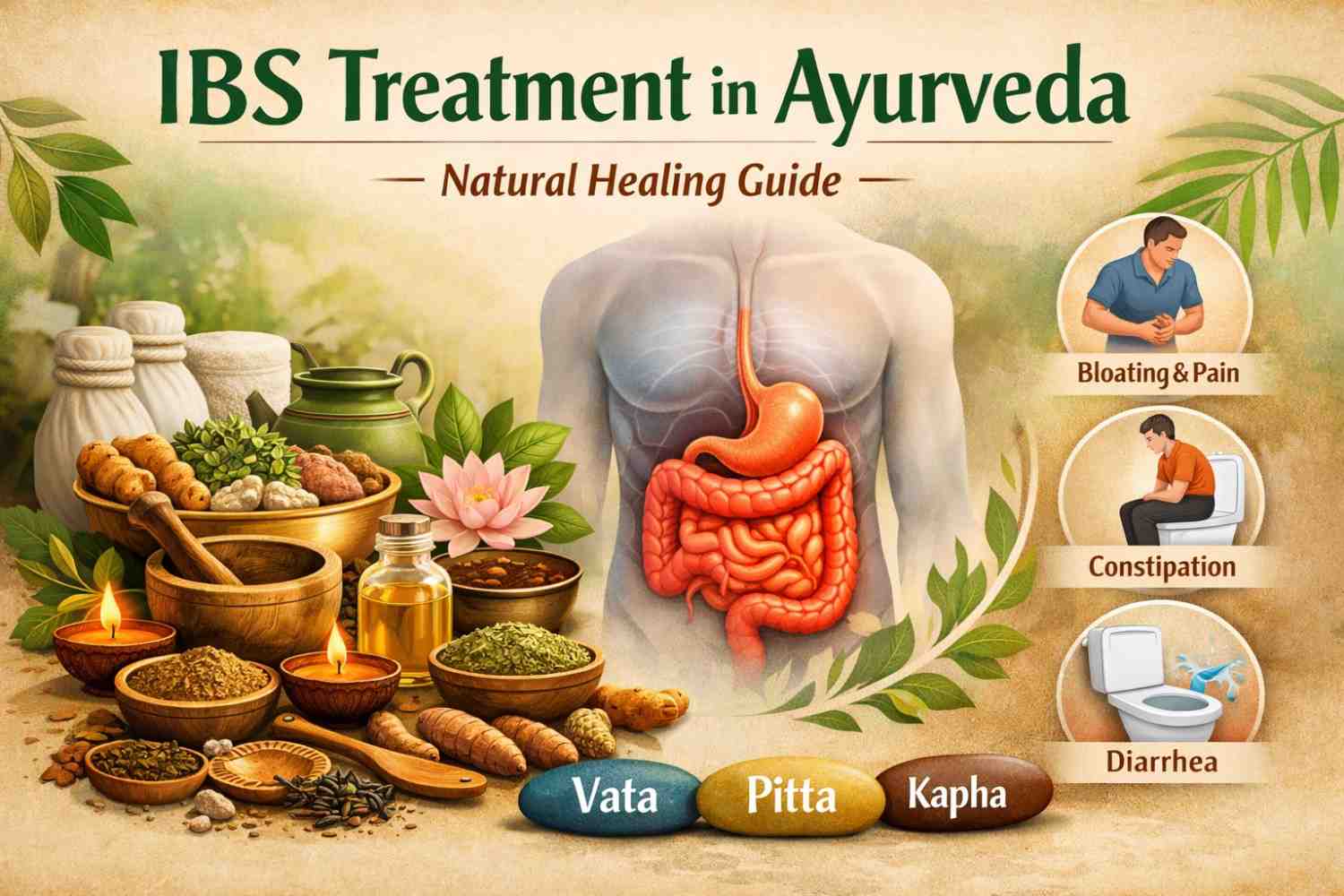
IBS Treatment in Ayurveda offers a natural and holistic approach to managing Irritable Bowel Syndrome without harsh chemicals or long-term dependency on medications. IBS is a common digestive disorder that causes symptoms like abdominal pain, bloating, gas, constipation, and diarrhea. While modern medicine focuses mainly on symptom control, IBS Treatment in Ayurveda aims to treat the root cause by balancing the body’s doshas — Vata, Pitta, and Kapha.
According to Ayurveda, IBS is closely linked to weakened digestive fire (Agni) and an imbalance in the gut. Through personalized diet plans, herbal remedies, detox therapies, and lifestyle corrections, IBS Treatment in Ayurveda helps restore digestive strength and improve overall gut health naturally. This natural healing system not only reduces symptoms but also supports long-term digestive wellness.
In this guide, we will explore the causes of IBS from an Ayurvedic perspective, effective herbal remedies, dietary recommendations, lifestyle changes, and practical tips to manage IBS safely and naturally.
IBS Treatment in Ayurveda focuses on correcting the root cause rather than suppressing symptoms. According to Ayurvedic principles, Irritable Bowel Syndrome is mainly linked to an imbalance in Vata dosha, which disturbs digestion and gut rhythm. Instead of only targeting bloating, constipation, or diarrhea, IBS Treatment in Ayurveda works to restore digestive fire (Agni) and calm the nervous system simultaneously.
Also read – Anti-Aging Herbs Used in Ayurveda
Understanding IBS in Ayurveda – A Holistic Perspective
Irritable Bowel Syndrome (IBS) affects millions of people worldwide. However, modern medicine often manages symptoms rather than addressing the root cause. Ayurveda, on the other hand, focuses on correcting internal imbalance and restoring digestive harmony. Therefore, if you want lasting relief, you must first understand IBS from an Ayurvedic viewpoint.
In Ayurveda, IBS closely resembles a condition known as Grahani Roga. Grahani refers to the small intestine and the digestive fire that governs absorption. When digestive fire becomes weak or irregular, the body fails to properly digest and assimilate food. As a result, symptoms such as bloating, abdominal pain, constipation, diarrhea, and irregular bowel movements begin to appear.
Unlike modern medicine, Ayurveda does not label IBS as one uniform disorder. Instead, it classifies IBS according to dosha imbalance:
- Vata-dominant IBS (constipation, gas, anxiety)
- Pitta-dominant IBS (diarrhea, burning sensation, acidity)
- Kapha-dominant IBS (mucus, heaviness, sluggish digestion)
Because each person has a unique constitution, treatment must be personalized. This is why Ayurvedic IBS treatment focuses on balancing doshas rather than suppressing symptoms.
Moreover, Ayurveda identifies weak Agni (digestive fire) as the primary root cause. When Agni weakens:
- Toxins (Ama) accumulate
- Gut lining becomes irritated
- Nutrient absorption reduces
- Bowel rhythm becomes irregular
Therefore, the core strategy involves strengthening Agni, removing Ama, and restoring intestinal balance.
Additionally, Ayurveda recognizes emotional factors. Stress, fear, and anxiety directly disturb Vata dosha, which further disrupts bowel movement. Consequently, mental health plays a critical role in IBS healing.
In summary, Ayurvedic IBS treatment aims to:
- Correct digestive fire
- Balance doshas
- Detoxify the body
- Calm the nervous system
- Restore gut rhythm naturally
Thus, instead of temporary relief, Ayurveda offers sustainable healing.
One of the core approaches in IBS Treatment in Ayurveda is identifying the patient’s body constitution (Prakriti) and the type of IBS they are experiencing. Whether it is constipation-dominant, diarrhea-dominant, or mixed type, IBS Treatment in Ayurveda recommends customized herbal formulations like Bilva, Kutaj, and Isabgol under proper guidance to regulate bowel movements naturally.
Also Read ;- Ayurvedic Weight Loss Plan for Beginners

Root Causes of IBS According to Ayurveda
Before jumping into treatment, you must understand why IBS develops. Ayurveda always addresses the cause before suggesting remedies. Therefore, identifying triggers becomes the first healing step.
1. Weak Digestive Fire (Mandagni)
The strongest cause of IBS is Mandagni. When digestive fire becomes weak:
- Food remains partially digested
- Fermentation increases
- Gas and bloating develop
- Toxins accumulate
Over time, this disrupts intestinal function. Consequently, bowel irregularity becomes chronic.
2. Ama (Toxic Build-Up)
Undigested food turns into sticky toxins called Ama. Ama blocks channels and irritates the intestinal lining. As a result, symptoms like heaviness, foul-smelling stools, and mucus appear.
3. Irregular Eating Habits
Skipping meals, overeating, and eating incompatible foods severely damage digestion. Furthermore, cold, processed, and junk foods disturb Agni. Gradually, IBS symptoms intensify.
4. Emotional Stress
Ayurveda strongly links gut health to mental balance. Chronic stress aggravates Vata dosha. Consequently, bowel movement becomes unpredictable.
5. Excessive Antibiotic Use
Modern antibiotics destroy healthy gut bacteria. As a result, digestion weakens and IBS symptoms worsen.
6. Dite
Diet plays a central role in IBS Treatment in Ayurveda. Warm, freshly cooked, easy-to-digest meals are encouraged, while processed foods, cold drinks, and excessive spices are avoided. Ayurveda believes that improper food combinations and irregular eating habits weaken digestion, making IBS symptoms worse. A structured eating routine is therefore essential in IBS Treatment in Ayurveda.
7. Stress
Stress management is another important pillar of IBS Treatment in Ayurveda. Since gut health is directly connected to mental health, calming therapies such as Abhyanga (oil massage), Shirodhara, and gentle yoga are often recommended. These therapies help balance Vata dosha and reduce anxiety-related flare-ups commonly seen in IBS patients.
Types of IBS in Ayurveda – Vata, Pitta, and Kapha IBS
Ayurveda clearly explains that IBS presents differently depending on dosha imbalance. Therefore, identifying your type becomes crucial for proper treatment.
Vata-Type IBS
This type commonly includes:
- Constipation
- Gas and bloating
- Dry stools
- Anxiety
- Irregular appetite
Because Vata governs movement, its imbalance causes erratic bowel patterns. Additionally, stress worsens this condition significantly.
Pitta-Type IBS
This type shows:
- Loose stools
- Burning sensation
- Acid reflux
- Irritability
- Foul smell in stool
Pitta represents heat. Therefore, excess internal heat leads to inflammation and diarrhea.
Kapha-Type IBS
This type involves:
- Mucus in stool
- Heavy digestion
- Sluggish metabolism
- Lethargy
Kapha slows everything down. Consequently, digestion becomes dull and heavy.
Identifying your IBS type ensures targeted healing rather than random remedies.
4. Ayurvedic Diagnosis of IBS – How Experts Assess Imbalance
Ayurvedic practitioners never rely on lab tests alone. Instead, they analyze the entire constitution of the patient.
Diagnosis includes:
- Pulse examination (Nadi Pariksha)
- Tongue analysis
- Stool observation
- Appetite assessment
- Emotional health evaluation
Additionally, practitioners observe:
- Coating on tongue (indicates Ama)
- Body temperature (reveals Pitta imbalance)
- Dryness in skin (indicates Vata aggravation)
Because IBS involves multiple systems, Ayurveda evaluates digestion, nervous system, and mental health together.
Therefore, treatment becomes personalized rather than generalized.
5. Ayurvedic Treatment Principles for IBS
Now that you understand causes and types, let’s discuss treatment principles.
Ayurvedic IBS treatment follows five major strategies:
1. Strengthening Digestive Fire
Herbs like ginger and trikatu stimulate digestion. Consequently, food digests efficiently.
2. Removing Ama
Detoxification through Panchakarma clears accumulated toxins.
3. Balancing Doshas
Herbs and diet vary depending on whether IBS is Vata, Pitta, or Kapha dominant.
4. Regulating Diet
Warm, freshly cooked food supports digestion. In contrast, cold and processed foods worsen symptoms.
5. Calming the Mind
Yoga, meditation, and breathing exercises stabilize Vata and improve bowel rhythm.
Therefore, IBS healing becomes a multi-dimensional process.
6. Best Ayurvedic Herbs for IBS – Natural Gut Healing Remedies
Now that you understand the root causes and treatment principles, let us move deeper into the core healing tools of Ayurveda: herbs. Ayurvedic herbs do not simply suppress symptoms. Instead, they correct digestive fire, balance doshas, remove toxins, and restore intestinal strength. Therefore, selecting the right herbs based on your IBS type becomes essential.
1. Kutaj (Holarrhena antidysenterica)
First and foremost, Kutaj stands as one of the most powerful herbs for IBS, especially for diarrhea-dominant IBS. It strengthens intestinal walls and reduces inflammation. Moreover, it controls excessive bowel frequency without causing constipation. Consequently, patients experience stable digestion.
Best for: Pitta-type IBS
2. Bilva (Bael)
Bilva fruit supports digestion and improves absorption. In addition, it regulates bowel movement gently. It works exceptionally well for both diarrhea and irregular stools. Therefore, many Ayurvedic formulations for Grahani include Bilva as a key ingredient.
Best for: Vata and Pitta IBS
3. Isabgol (Psyllium Husk)
Unlike chemical laxatives, Isabgol regulates bowel movement naturally. It absorbs excess water during diarrhea and softens stool during constipation. Consequently, it helps balance alternating IBS symptoms.
Best for: Vata IBS with constipation
4. Triphala
Triphala combines Amla, Haritaki, and Bibhitaki. This powerful combination detoxifies the gut while strengthening digestion. Furthermore, it promotes regular elimination without dependency. Therefore, Triphala plays a central role in long-term IBS management.
Best for: All dosha types (when used appropriately)
5. Ashwagandha
Because stress aggravates IBS, Ashwagandha helps significantly. It calms the nervous system and stabilizes Vata. As a result, anxiety-related bowel disturbances reduce dramatically.
Best for: Stress-induced IBS
6. Jeera, Dhaniya, Saunf (Cumin, Coriander, Fennel)
These kitchen herbs improve digestion instantly. Additionally, they reduce bloating and gas. Drinking their decoction daily enhances digestive fire naturally.
Best for: Mild IBS and daily maintenance
Important Note
Although these herbs offer immense benefits, dosage and combinations must align with your constitution. Therefore, always consult a qualified Ayurvedic practitioner before starting herbal treatment.
Panchakarma Therapy for IBS – Deep Detox and Gut Reset
While herbs provide gradual healing, Panchakarma offers deeper detoxification. If toxins accumulate severely, simple remedies may not work effectively. Therefore, Ayurvedic experts recommend Panchakarma in chronic IBS cases.
Panchakarma focuses on removing Ama and restoring dosha balance. Let us explore key therapies:
1. Virechana (Therapeutic Purgation)
Virechana eliminates excess Pitta from the body. It clears inflammation and toxins from the digestive tract. Consequently, diarrhea, acidity, and burning sensation improve significantly.
Best for: Pitta-dominant IBS
2. Basti (Medicated Enema)
Basti serves as the primary therapy for Vata disorders. Since IBS often involves Vata imbalance, Basti provides profound relief. It nourishes the colon and restores bowel rhythm.
Best for: Vata IBS
3. Takra Dhara (Buttermilk Therapy)
This therapy pours medicated buttermilk over the abdomen. It cools inflammation and strengthens digestive organs. Therefore, it works well in chronic diarrhea cases.
4. Shirodhara
Because stress worsens IBS, Shirodhara calms the nervous system. Continuous pouring of medicated oil on the forehead reduces anxiety and stabilizes Vata.
Why Panchakarma Works in IBS Treatment in Ayurveda
Unlike temporary symptom control, Panchakarma plays a powerful role in IBS Treatment in Ayurveda because it resets the digestive system at a foundational level. Rather than only reducing bloating or irregular bowel movements, this classical detox therapy eliminates deep-rooted toxins (Ama) that disturb gut function. By cleansing the system thoroughly, IBS Treatment in Ayurveda through Panchakarma restores balance to aggravated doshas, especially Vata.
Another reason why Panchakarma works in IBS Treatment in Ayurveda is its ability to improve metabolism and rekindle digestive fire (Agni). Weak digestion is considered the primary trigger behind chronic IBS symptoms. When Agni becomes stable, food is digested properly, reducing gas formation, cramps, and unpredictable bowel patterns. This makes IBS Treatment in Ayurveda more sustainable rather than temporary.
Panchakarma also strengthens the intestinal lining, which is often compromised in long-standing digestive disorders. Through therapies like Virechana and Basti, IBS Treatment in Ayurveda helps repair gut tissues and improve nutrient absorption. Consequently, relapse chances decrease significantly, and patients experience long-term digestive stability.
However, it is important to remember that Panchakarma should never be self-administered. Since IBS Treatment in Ayurveda is personalized based on body constitution and symptom type, Panchakarma must always be performed under professional Ayurvedic supervision to ensure safety and effectiveness.
IBS Diet Plan According to Dosha – What to Eat and Avoid
Now comes the most powerful healing tool: diet. Ayurveda strongly believes that food acts as medicine. Therefore, dietary discipline determines recovery speed.
Vata-Type IBS Diet
Since Vata causes dryness and irregularity, focus on warm, moist, and grounding foods.
Eat:
- Warm khichdi
- Ghee
- Cooked vegetables
- Rice
- Soups
- Herbal teas
Avoid:
- Raw salads
- Cold drinks
- Dry snacks
- Excess beans
Pitta-Type IBS Diet
Because Pitta creates heat, choose cooling and soothing foods.
Eat:
- Coconut water
- Rice
- Moong dal
- Sweet fruits
- Cucumber
- Buttermilk
Avoid:
- Spicy food
- Fried items
- Excess salt
- Sour foods
Kapha-Type IBS Diet
Kapha slows digestion. Therefore, eat light and stimulating foods.
Eat:
- Ginger tea
- Millets
- Steamed vegetables
- Warm spices
Avoid:
- Dairy
- Heavy sweets
- Cold desserts
- Oily foods
Universal IBS Diet Tips
- Eat at fixed times daily
- Avoid overeating
- Chew food thoroughly
- Eat freshly cooked meals
- Avoid processed food
Consistency creates digestive stability. Therefore, never ignore meal timing.
Yoga and Pranayama for IBS Relief
Although herbs and diet help greatly, lifestyle correction completes healing. Yoga improves gut motility, reduces stress, and enhances digestion. Therefore, combining yoga with Ayurvedic treatment accelerates recovery.

1. Pavanamuktasana (Wind-Relieving Pose)
This pose releases trapped gas and reduces bloating. Practicing daily improves bowel movement.
2. Vajrasana
Sitting in Vajrasana after meals improves digestion instantly. It enhances blood flow to abdominal organs.
3. Bhujangasana (Cobra Pose)
This posture strengthens abdominal muscles and stimulates digestive organs.
4. Anulom Vilom
Alternate nostril breathing balances Vata and calms anxiety. Consequently, stress-induced IBS reduces.
5. Bhramari Pranayam
This breathing technique reduces nervous tension quickly. It improves gut-brain coordination.
Practicing 20–30 minutes daily creates significant improvement within weeks.
Daily Routine (Dinacharya) for IBS Healing
Finally, let us integrate everything into a practical daily routine. Ayurveda emphasizes discipline because irregular habits disturb digestion.
Morning
- Wake up early
- Drink warm water
- Practice light yoga
- Perform Abhyanga (self oil massage)
Midday
- Eat largest meal at lunch
- Avoid heavy dinner
- Walk for 10 minutes after meals
Evening
- Eat light dinner before sunset
- Avoid screen stress
- Practice meditation
Sleep
- Sleep before 10:30 PM
- Avoid late-night eating
Routine stabilizes digestive rhythm. Therefore, following Dinacharya strengthens long-term gut health.
Long-Term IBS Prevention in Ayurveda – Building Digestive Resilience
Now that you understand herbs, detox therapies, diet, and lifestyle, let us move toward the ultimate goal: long-term prevention. Many people manage IBS temporarily; however, symptoms often return because they neglect digestive resilience. Therefore, Ayurveda emphasizes strengthening the digestive system permanently rather than chasing short-term relief.
First and foremost, you must protect your Agni (digestive fire) daily. Strong Agni prevents toxin formation and maintains smooth bowel movement. Consequently, IBS symptoms gradually disappear when Agni remains stable.
Maintain Regular Meal Timing
Irregular eating disturbs digestive rhythm immediately. Therefore, eat at fixed times every day. When you follow consistent timing, your digestive system prepares itself naturally. As a result, food digests efficiently.
Avoid Emotional Eating
Stress-eating and late-night snacking weaken digestion. Instead, eat in a calm environment. Furthermore, avoid screens while eating because distraction interrupts digestive signals.
Strengthen Gut with Seasonal Eating
Ayurveda aligns diet with seasons. During winter, eat slightly heavier but warm foods. In summer, choose cooling and hydrating meals. Consequently, seasonal balance prevents dosha aggravation.
Use Digestive Spices Daily
Add cumin, coriander, fennel, ginger, and turmeric to meals. These spices stimulate Agni gently. Therefore, they prevent gas, bloating, and indigestion before they start.
Practice Mindful Living
Since IBS connects strongly to the gut-brain axis, emotional discipline becomes essential. Meditation, gratitude journaling, and slow breathing techniques reduce stress hormones. As a result, Vata stabilizes, and bowel rhythm improves.
Long-term prevention demands consistency. However, once you establish healthy digestive habits, IBS loses its control over your life.
Powerful Home Remedies for IBS Relief
Although professional guidance remains important, several safe home remedies support IBS healing effectively. These remedies work best for mild to moderate symptoms and daily maintenance.
1. Ginger Tea
Ginger ignites digestive fire instantly. Therefore, drinking warm ginger tea before meals improves digestion. It reduces bloating and nausea significantly.
How to prepare:
- Boil fresh ginger in water for 5–7 minutes.
- Sip warm before meals.
2. Cumin-Coriander-Fennel Water
This classical Ayurvedic drink balances all three doshas gently. Moreover, it reduces acidity and gas naturally.
How to prepare:
- Boil 1 teaspoon each of cumin, coriander, and fennel seeds.
- Strain and drink warm.
3. Buttermilk with Roasted Cumin
Buttermilk strengthens intestinal lining and improves absorption. Furthermore, roasted cumin enhances digestion. Therefore, this combination works wonderfully in diarrhea-dominant IBS.
4. Warm Ghee at Night
For constipation-related IBS, consume one teaspoon of warm ghee in milk before bed. It lubricates intestines and promotes smooth elimination.
5. Pomegranate for Pitta IBS
Pomegranate soothes inflammation and strengthens intestines. Therefore, it supports diarrhea control naturally.
However, always observe your body’s response. If symptoms worsen, consult an Ayurvedic expert immediately.
Emotional Healing and the Gut-Brain Connection
Now let us address the most overlooked aspect of IBS: emotional imbalance. Ayurveda clearly states that mind and gut function together. Therefore, healing IBS without calming the mind becomes incomplete.
How Stress Triggers IBS
Stress increases cortisol levels. Consequently, digestive fire becomes irregular. Vata aggravates, and bowel movement becomes unpredictable. Therefore, chronic anxiety often leads to IBS flare-ups.
Meditation for IBS
Daily meditation stabilizes the nervous system. It reduces stress hormones and improves vagus nerve function. As a result, gut motility improves naturally.
Journaling for Emotional Detox
Unexpressed emotions create internal tension. Writing your thoughts daily releases mental pressure. Consequently, bowel symptoms reduce gradually.
Abhyanga (Self-Oil Massage)
Warm oil massage calms Vata immediately. It improves circulation and relaxes abdominal muscles. Therefore, daily Abhyanga plays a powerful role in IBS recovery.
Digital Detox
Excess screen time overstimulates the nervous system. Therefore, reduce screen exposure at night. Prioritize sleep hygiene for better gut healing.
Emotional stability accelerates physical recovery. Thus, true IBS healing begins in the mind.
Ayurvedic Supplements and Formulations for IBS
In addition to herbs and lifestyle correction, classical Ayurvedic formulations provide structured treatment. However, always take supplements under supervision.
1. Kutajghan Vati
This formulation controls diarrhea effectively. It strengthens intestines and reduces inflammation. Therefore, practitioners often prescribe it for Pitta-type IBS.
2. Dadimashtak Churna
This powder improves digestion and absorption. Moreover, it reduces gas and irregular bowel movement.
3. Hingwashtak Churna
Hingwashtak improves Agni significantly. It works well for Vata-related bloating and constipation.
4. Avipattikar Churna
This formulation balances Pitta and reduces acidity. Therefore, it helps patients with burning sensation and loose stools.
5. Ashwagandha Capsules
Ashwagandha reduces stress-induced IBS symptoms. It strengthens adrenal function and calms anxiety.
Supplements enhance recovery; however, they must align with your dosha and symptom pattern.
Complete Ayurvedic IBS Healing Blueprint – Step-by-Step Plan
Step 1: Identify Your Dosha Type
Determine whether your IBS relates to Vata, Pitta, or Kapha imbalance. Accurate identification ensures targeted healing.
Step 2: Correct Diet Immediately
Follow a dosha-specific diet. Eliminate processed food completely. Prioritize warm, fresh, and simple meals.
Step 3: Start Herbal Support
Use appropriate Ayurvedic herbs and formulations under guidance.
Step 4: Practice Daily Yoga and Breathing
Dedicate at least 20 minutes daily to pranayama and gentle yoga. Consistency creates visible improvement.
Step 5: Manage Stress Aggressively
Adopt meditation, journaling, and proper sleep routine. Since IBS links directly to stress, emotional discipline remains non-negotiable.
Step 6: Consider Panchakarma (If Chronic)
For long-standing IBS, consult an Ayurvedic doctor for detox therapy.
Frequently Asked Questions (FAQs)
1. What is IBS according to Ayurveda?
In Ayurveda, IBS is commonly associated with Grahani Roga, caused by weak digestion (Agni) and imbalance of Vata and Pitta doshas.
2. Can Ayurveda cure IBS permanently?
Ayurveda focuses on correcting the root cause through diet, herbs, and lifestyle changes, which can significantly reduce and manage IBS symptoms long-term.
3. Which Ayurvedic herbs are best for IBS?
Triphala, Kutaj, Bilva, Ashwagandha, and Isabgol are commonly used to support digestive health and relieve IBS symptoms.
4. How long does Ayurvedic treatment for IBS take?
Improvement may begin within 4–8 weeks, depending on severity and consistency of treatment.
5. Is Triphala good for IBS?
Yes, Triphala helps regulate bowel movements, detoxify the gut, and improve digestion.
6. What diet is recommended for IBS in Ayurveda?
A warm, freshly cooked, easy-to-digest diet with minimal processed foods is recommended. Avoid spicy, fried, and cold foods.
7. Can stress trigger IBS symptoms?
Yes, stress increases Vata imbalance, which can worsen bloating, cramps, and irregular bowel movements.
8. Is Panchakarma helpful for IBS?
Yes, specific Panchakarma therapies like Basti (medicated enema) can help balance Vata and improve gut function.
9. Is Isabgol safe for daily use?
Isabgol is generally safe when taken in proper dosage under professional guidance.
10. Does Ayurveda recommend lifestyle changes for IBS?
Yes, regular sleep, yoga, pranayama, and mindful eating are essential parts of IBS management in Ayurveda.
Final Words
IBS does not develop overnight. Similarly, healing requires patience and discipline. However, Ayurveda offers a complete natural system that addresses root causes instead of masking symptoms. By strengthening digestive fire, removing toxins, balancing doshas, and calming the mind, you can restore gut harmony permanently.
Therefore, instead of depending solely on temporary medication, choose holistic healing. With proper guidance and consistency, you can regain digestive strength and live free from IBS discomfort.
References
- Charaka Samhita – Grahani Roga and Digestive Disorders
- Sushruta Samhita – Ayurvedic Gastrointestinal Disorders
- Bhavaprakasha Nighantu – Herbal Digestive Remedies
- Journal of Ethnopharmacology – Research on Triphala and Kutaj
- Ministry of AYUSH, Government of India – IBS and Digestive Health Guidelines
Get a free call with an expert on – Shloka