
Understanding Constipation in Ayurveda – Root Causes and Imbalances
Constipation is not just a digestive inconvenience; instead, it reflects a deeper imbalance inside the body. While modern medicine defines constipation as infrequent bowel movements or difficulty passing stools, Ayurveda looks far beyond symptoms. It identifies constipation as a disturbance in the Vata dosha, particularly the Apana Vata, which governs elimination.
Therefore, if you truly want long-term relief from constipation, you must first understand its root cause.
According to Ayurveda, the digestive system functions through the strength of Agni (digestive fire). When Agni weakens, digestion slows down. As a result, food does not break down properly, toxins (Ama) accumulate, and stools become dry and hard. Consequently, elimination becomes painful or irregular.
Moreover, modern lifestyle habits significantly worsen this imbalance. For example:
- Irregular eating patterns
- Excess consumption of processed foods
- Lack of fiber
- Chronic stress
- Dehydration
- Sedentary lifestyle
All these factors aggravate Vata dosha. When Vata increases, dryness increases. Naturally, dryness in the colon leads to hard stool formation.
However, Ayurveda does not recommend aggressive chemical laxatives. Instead, it focuses on:
- Balancing Vata
- Strengthening digestion
- Lubricating the intestines
- Removing accumulated toxins
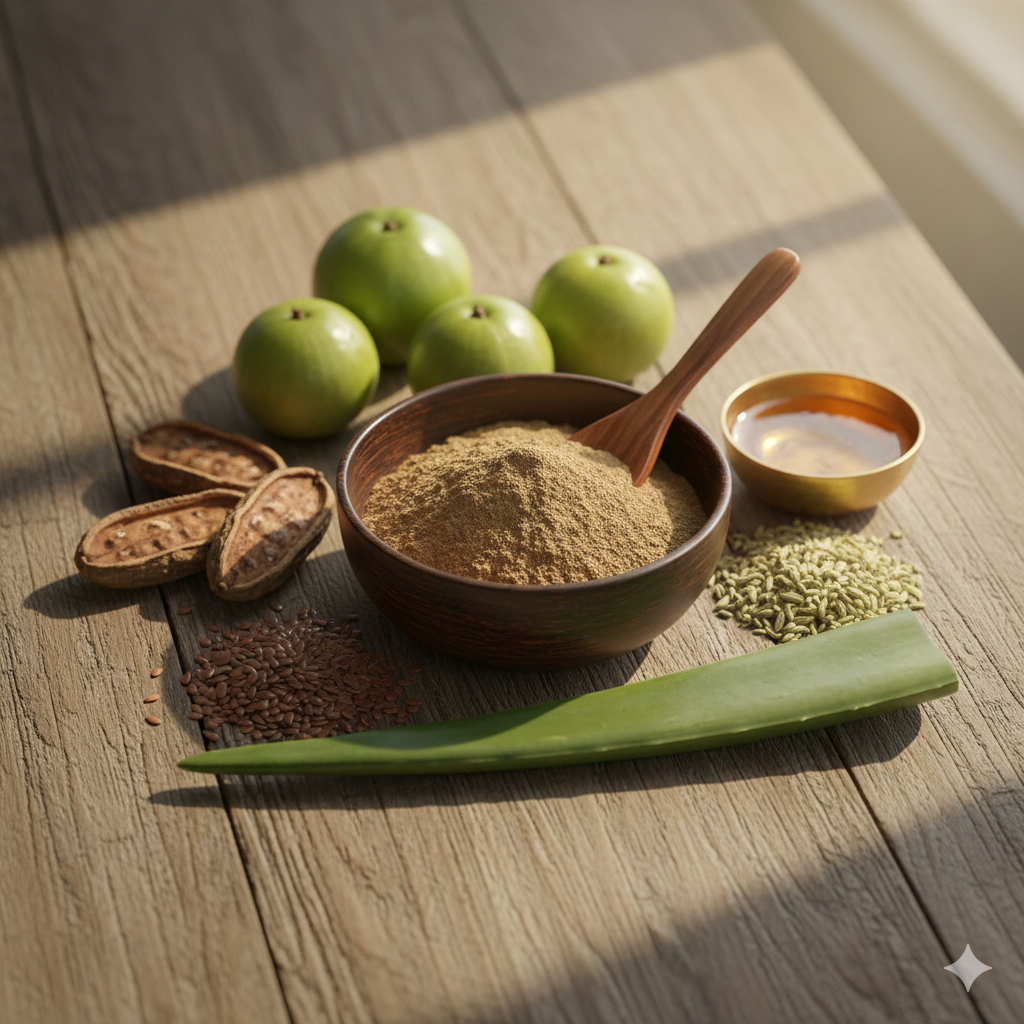
Therefore, Ayurvedic herbs for constipation work gently yet effectively. They restore natural bowel rhythm instead of forcing elimination.
Additionally, Ayurveda classifies constipation into different types:
- Vata-type constipation – Dry, hard stool with bloating and gas
- Pitta-type constipation – Burning sensation and irritation
- Kapha-type constipation – Heavy, sluggish digestion
Each type requires specific herbs. Thus, blindly taking any laxative may not solve the problem permanently.
Most importantly, chronic constipation can lead to:
- Headaches
- Skin issues
- Piles
- Fissures
- Bad breath
- Fatigue
Therefore, you must treat constipation at the root level rather than suppressing symptoms.
In the next sections, we will explore the best Ayurvedic herbs for constipation that cleanse the colon, improve digestion, and promote smooth bowel movements naturally.
Also read- Ayurvedic Weight Loss Plan for Beginners
Triphala – The Most Powerful Ayurvedic Herb for Constipation
When discussing the best Ayurvedic herbs for constipation, Triphala stands at the top. In fact, Ayurveda considers Triphala one of the safest and most effective herbal formulations for long-term digestive health.
Triphala means “three fruits.” It contains:
- Amla (Emblica officinalis)
- Haritaki (Terminalia chebula)
- Bibhitaki (Terminalia bellirica)
Together, these three fruits create a powerful detoxifying combination.
First of all, Haritaki improves bowel movement and reduces dryness. Secondly, Amla strengthens digestion and nourishes tissues. Thirdly, Bibhitaki removes toxins and supports colon cleansing.
Therefore, Triphala does not act like a harsh stimulant laxative. Instead, it tones the intestines and restores natural peristalsis.
Benefits of Triphala for Constipation
- Softens stool naturally
- Improves digestion
- Reduces bloating
- Removes Ama (toxins)
- Strengthens gut lining
- Safe for long-term use
Moreover, Triphala balances all three doshas. That makes it suitable for most body types.
How to Use Triphala
- Take ½ to 1 teaspoon Triphala powder
- Mix in warm water
- Consume at night before sleep
Alternatively, you can use Triphala tablets if you prefer convenience.
Most importantly, regular use improves overall gut health rather than giving temporary relief.
Isabgol (Psyllium Husk) – Natural Bulk-Forming Herb
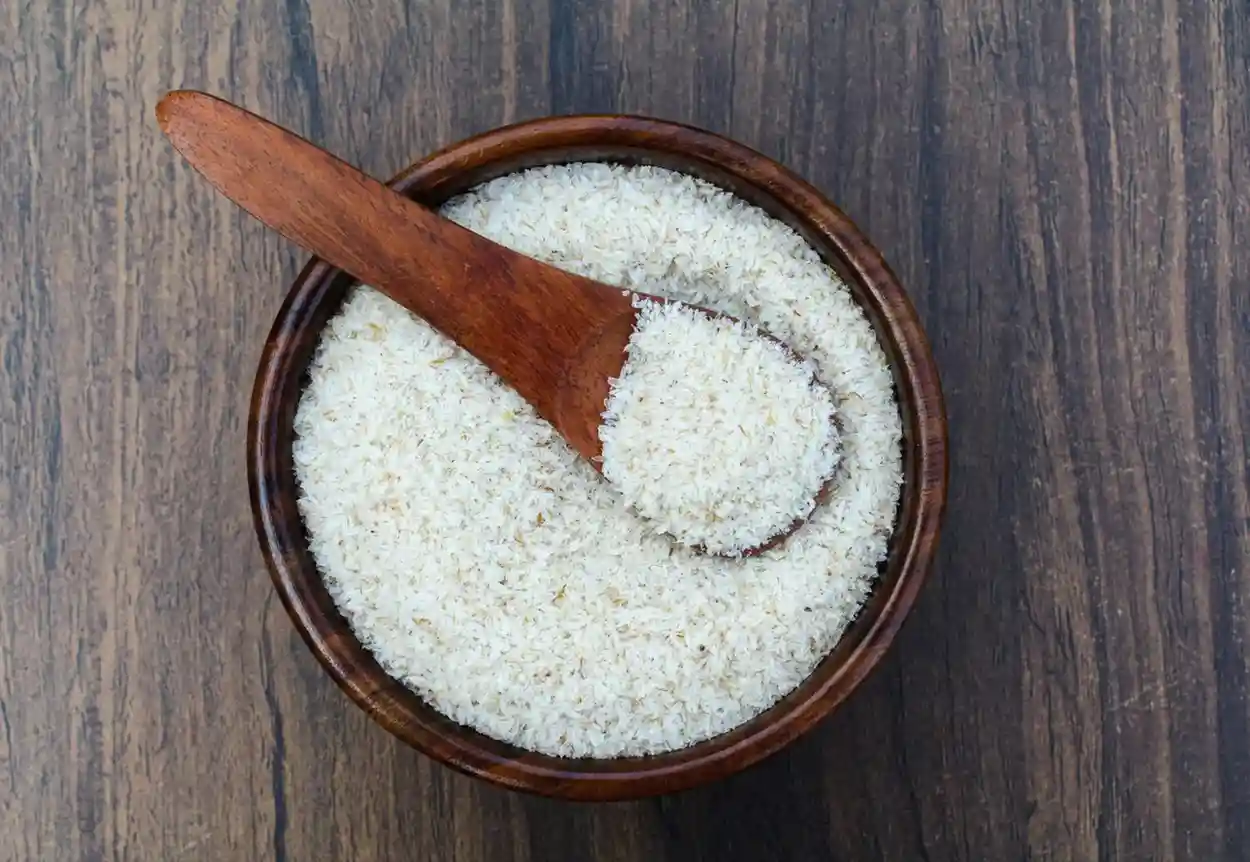
If dryness causes constipation, then Isabgol offers immediate support. Also known as Psyllium husk, Isabgol acts as a natural bulk-forming laxative.
Unlike chemical laxatives, Isabgol absorbs water and increases stool volume. Consequently, bowel movement becomes easier and smoother.
How It Works
- Absorbs water in intestines
- Adds bulk to stool
- Stimulates natural bowel movement
- Reduces straining
Furthermore, Isabgol also supports:
- Cholesterol control
- Blood sugar balance
- Colon cleansing
How to Use Isabgol
- Take 1–2 teaspoons
- Mix in warm water or milk
- Drink immediately
- Follow with a glass of water
However, always consume sufficient water with Isabgol. Otherwise, it may cause blockage.
Although Isabgol provides quick relief, you should combine it with digestive herbs for long-term healing.
Also Read :- PCOS Treatment in Ayurveda – Natural Hormone Balance
Senna – Strong Ayurvedic Herb for Severe Constipation
Senna works effectively for severe constipation. It contains natural compounds called sennosides that stimulate intestinal muscles.
Therefore, doctors often recommend Senna for short-term relief.
Benefits
- Fast action (6–8 hours)
- Clears severe blockage
- Useful before medical procedures
However, long-term use may cause dependency. Consequently, Ayurveda suggests using Senna only occasionally.
How to Use
- Senna tea at bedtime
- Senna tablets under guidance
Most importantly, avoid daily use without supervisio
Castor Oil – Ancient Ayurvedic Detox Remedy
Castor oil has been used in Ayurveda for centuries. It lubricates intestines and promotes smooth elimination.
Benefits
- Lubricates colon
- Removes toxins
- Relieves gas
- Reduces inflammation
How to Use
- 1–2 teaspoons in warm milk
- Consume at night
- Use once weekly for detox
However, avoid during pregnancy.
Haritaki – The “King of Herbs” for Digestive Cleansing
When discussing the best Ayurvedic herbs for constipation, Haritaki deserves special attention. In fact, Ayurvedic texts often call Haritaki the “King of Medicines.” Why? Because it directly strengthens digestion, improves bowel movement, and rejuvenates the colon simultaneously. Therefore, if you struggle with chronic constipation, Haritaki offers one of the most reliable natural solutions.
Haritaki primarily balances Vata dosha. Since most constipation cases arise from aggravated Vata, Haritaki works at the root level rather than offering temporary relief. Unlike harsh chemical laxatives, Haritaki restores natural bowel rhythm. Consequently, your body eliminates waste smoothly without dependency.
Moreover, Haritaki improves Agni (digestive fire). When Agni functions properly, digestion becomes efficient. As a result, stool formation improves, toxins reduce, and elimination becomes regular. Therefore, Haritaki not only relieves constipation but also strengthens overall gut health.
How Haritaki Works for Constipation
First, Haritaki gently stimulates intestinal movement.
Second, it reduces dryness in the colon.
Third, it removes accumulated Ama (toxins).
Finally, it tones intestinal muscles for long-term balance.
Additionally, Haritaki supports liver function. Since the liver plays a crucial role in digestion and detoxification, improved liver function indirectly enhances bowel movement. Therefore, this herb offers a comprehensive digestive reset.
Benefits of Haritaki
- Promotes regular bowel movements
- Reduces bloating and gas
- Strengthens digestion
- Improves nutrient absorption
- Supports detoxification
- Prevents piles caused by chronic constipation
Furthermore, Haritaki also supports mental clarity. Ayurveda believes that toxins in the gut affect mental sharpness. Therefore, cleansing the colon improves focus and energy levels.
How to Use Haritaki for Constipation
You can take Haritaki powder at night for best results.
Method:
- Take ½ teaspoon Haritaki powder
- Mix with warm water
- Consume before bedtime
Alternatively, you can take Haritaki tablets for convenience. However, powder form often works faster.
Most importantly, start with a small dose. Then gradually increase if required. Excess dosage may cause loose stools.
Who Should Use Haritaki?
- Individuals with chronic constipation
- People experiencing bloating and gas
- Those with irregular bowel habits
- Individuals suffering from Vata imbalance
In conclusion, Haritaki stands out as one of the most powerful Ayurvedic herbs for constipation because it heals digestion holistically. Therefore, if you want sustainable relief instead of quick fixes, Haritaki deserves a place in your routine.
Amla – Nourishing Herb That Improves Gut Strength
Although many people associate Amla with immunity and vitamin C, it also plays a vital role in digestive health. In fact, Amla strengthens Agni while soothing the digestive tract. Therefore, it works exceptionally well for constipation caused by weak digestion.
Unlike stimulant laxatives, Amla nourishes tissues. As a result, it strengthens intestinal walls and promotes natural elimination. Moreover, Amla balances Pitta dosha while supporting Vata regulation. Consequently, it reduces inflammation and dryness simultaneously.
Why Amla Helps in Constipation
Constipation often develops due to weak digestive fire. When food does not digest properly, stool becomes irregular. However, Amla enhances digestive strength. Therefore, stool formation becomes smoother and more consistent.
Additionally, Amla contains natural antioxidants. These antioxidants reduce inflammation inside the gut lining. As a result, bowel movements become less painful.
Key Benefits of Amla for Constipation
- Strengthens digestion
- Reduces acidity
- Nourishes colon lining
- Prevents straining
- Boosts immunity
- Improves skin health
Interestingly, Ayurveda recommends Amla as a Rasayana (rejuvenating herb). Therefore, long-term use promotes overall vitality.
How to Use Amla
You can consume Amla in several forms:
- Fresh Amla juice in the morning
- Amla powder with warm water
- Amla capsules
- Amla murabba (in moderation)
For constipation relief, take 1 teaspoon Amla powder with warm water before sleep. Alternatively, combine it with Triphala for enhanced results.
Who Benefits Most from Amla?
- Individuals with constipation and acidity
- People experiencing burning sensation
- Those with weak digestion
- Individuals seeking gentle, long-term support
However, avoid excessive intake if you have severe cold or low digestive fire.
In summary, Amla offers a gentle yet effective way to manage constipation naturally. Therefore, if you prefer nourishing herbs instead of strong laxatives, Amla provides an excellent option.
Aloe Vera – Cooling and Lubricating Digestive Support
Aloe Vera does far more than improve skin health. In fact, Ayurveda recognizes Aloe Vera as a powerful herb for digestive cleansing. Therefore, if dryness and heat cause your constipation, Aloe Vera can provide effective relief.
Aloe Vera lubricates the intestines. Consequently, stool passes smoothly without straining. Moreover, it cools inflammation in the gut. Therefore, individuals suffering from Pitta-related constipation benefit significantly.

How Aloe Vera Helps
First, it hydrates intestinal tissues.
Second, it reduces inflammation.
Third, it improves digestion.
Finally, it promotes natural elimination.
Unlike chemical laxatives, Aloe Vera supports the digestive system gently. Therefore, you avoid dependency issues.
Benefits of Aloe Vera for Constipation
- Softens stool
- Reduces acidity
- Cleanses toxins
- Supports liver health
- Improves hydration
Additionally, Aloe Vera improves skin clarity because a clean gut reflects on the skin.
How to Use Aloe Vera
- Take 20–30 ml fresh Aloe Vera juice
- Consume on an empty stomach
- Follow for 7–10 days
However, avoid excessive consumption. High doses may cause loose stools.
In conclusion, Aloe Vera provides cooling, hydrating, and detoxifying benefits. Therefore, it ranks among the best Ayurvedic herbs for constipation.
Licorice (Mulethi) – Soothing Herb for Dry Colon
Licorice, also known as Mulethi, soothes irritated tissues. Therefore, it works effectively for constipation accompanied by dryness and inflammation.
Licorice increases mucus production in the intestines. As a result, stool moves smoothly. Moreover, it reduces gut irritation.
Benefits of Licorice
- Lubricates colon
- Reduces inflammation
- Improves digestion
- Relieves mild constipation
- Soothes ulcers
How to Use
- ½ teaspoon Licorice powder
- Mix with warm water or honey
- Consume once daily
However, individuals with high blood pressure should avoid excessive use.
Therefore, Licorice works best for mild constipation linked to dryness.
Ginger – Stimulating Digestive Fire Naturally
Finally, Ginger plays a crucial role in relieving constipation. Although people mainly use it for nausea, Ginger strengthens digestive fire dramatically.
When Agni becomes strong, digestion improves. Consequently, stool formation becomes regular.
How Ginger Helps
- Stimulates digestion
- Reduces gas
- Improves metabolism
- Prevents toxin buildup
How to Use
- Ginger tea before meals
- Fresh ginger with rock salt
- Ginger powder in warm water
However, avoid excessive intake if you experience high acidity.
In summary, Ginger enhances digestive efficiency. Therefore, combining Ginger with lubricating herbs creates powerful synergy for constipation relief.
Fennel Seeds (Saunf) – Gentle Yet Powerful Digestive Regulator
When discussing the best Ayurvedic herbs for constipation, many people overlook Fennel seeds. However, Fennel (Saunf) plays a crucial role in improving digestion and preventing irregular bowel movements. Therefore, if bloating, gas, and sluggish digestion contribute to your constipation, Fennel can provide natural relief.
First of all, Fennel stimulates digestive enzymes. As a result, food breaks down properly inside the stomach and intestines. Consequently, stool forms smoothly and moves without difficulty. Moreover, Fennel relaxes intestinal muscles. Therefore, it reduces cramping and supports natural elimination.
Unlike harsh laxatives, Fennel does not force bowel movement. Instead, it improves digestive efficiency. That is precisely why Ayurveda recommends Fennel after meals. It enhances digestion immediately and prevents toxin buildup.
How Fennel Helps Relieve Constipation
- Stimulates digestive fire (Agni)
- Reduces bloating and gas
- Relaxes intestinal muscles
- Improves nutrient absorption
- Supports smooth elimination
Additionally, Fennel contains volatile oils that calm the digestive tract. Consequently, individuals suffering from stress-related constipation benefit significantly.
Furthermore, Fennel balances Vata and Pitta dosha. Since Vata imbalance causes dryness and irregularity, balancing it improves bowel rhythm naturally.
How to Use Fennel Seeds for Constipation
You can consume Fennel in multiple ways:
- Chew 1 teaspoon of roasted Fennel seeds after meals.
- Prepare Fennel tea by boiling 1 teaspoon seeds in water for 5 minutes.
- Mix Fennel powder with warm water before bed.
For chronic constipation, drink Fennel tea twice daily. However, consistency matters more than dosage. Therefore, regular intake produces better results.
Most importantly, Fennel suits almost everyone. It rarely causes side effects. Nevertheless, individuals with hormone-sensitive conditions should consult a professional before long-term use.
In conclusion, Fennel seeds offer gentle digestive stimulation. Therefore, they rank among the safest Ayurvedic herbs for constipation, especially for mild and stress-induced digestive issues.
Flax Seeds – Fiber-Rich Ayurvedic Support for Regular Bowel Movement
Although Flax seeds originated outside classical Ayurvedic texts, modern Ayurvedic practitioners widely recommend them for constipation relief. Why? Because Flax seeds contain high soluble and insoluble fiber. Therefore, they improve stool bulk and moisture simultaneously.
Constipation often develops due to fiber deficiency. When stool lacks bulk, movement slows. However, Flax seeds absorb water and expand in the intestines. Consequently, they promote natural bowel movement without irritation.
Moreover, Flax seeds contain omega-3 fatty acids. These healthy fats lubricate intestinal walls. As a result, stool passes easily without straining.
Benefits of Flax Seeds for Constipation
- Increase stool bulk
- Improve intestinal lubrication
- Reduce inflammation
- Balance cholesterol
- Support gut microbiome
Additionally, Flax seeds improve colon health by feeding beneficial gut bacteria. Therefore, they enhance long-term digestive balance.
How to Use Flax Seeds
For best results:
- Take 1 tablespoon ground Flax seeds
- Mix with warm water
- Consume before bedtime
- Drink an additional glass of water
Grinding remains essential. Whole seeds may pass undigested. Therefore, always use freshly ground seeds.
However, excessive intake may cause bloating. Start with small amounts and increase gradually.
In summary, Flax seeds provide fiber-rich, natural constipation relief. Therefore, combining them with Ayurvedic herbs like Triphala enhances digestive outcomes significantly.
Ghee – The Ultimate Ayurvedic Lubricant for Dry Constipation
Surprisingly, one of the best Ayurvedic remedies for constipation sits in your kitchen: Ghee. Ayurveda considers Ghee a powerful digestive enhancer and intestinal lubricant. Therefore, if dryness causes your constipation, Ghee can transform your digestive health.
First, Ghee lubricates intestinal walls. Consequently, stool moves smoothly without friction. Second, Ghee strengthens Agni when used correctly. As a result, digestion improves naturally.
Unlike refined oils, pure cow ghee nourishes tissues deeply. Moreover, it supports the absorption of fat-soluble vitamins. Therefore, it improves overall gut nourishment.
Why Ghee Works So Effectively
Dryness defines Vata-type constipation. Since Ghee possesses unctuous and nourishing qualities, it directly counteracts dryness. Consequently, regular intake reduces hard stool formation.
Additionally, Ghee supports detoxification. It binds toxins and facilitates elimination through stool. Therefore, it acts as both a lubricant and detox agent.
How to Use Ghee for Constipation
For mild constipation:
- Add 1–2 teaspoons Ghee to warm milk
- Consume before bedtime
For chronic dryness:
- Include Ghee in daily meals
- Use it in cooking instead of refined oils
However, moderation remains essential. Excess consumption may cause weight gain.
In conclusion, Ghee offers one of the safest Ayurvedic solutions for dry constipation. Therefore, incorporating it into your routine improves digestion naturally and sustainably.
Bael Fruit – Traditional Digestive Strengthener
Bael fruit holds a respected place in Ayurvedic medicine. Although many people use Bael for diarrhea, it also regulates bowel movement effectively. Therefore, Bael works exceptionally well for alternating constipation and irregular digestion.
Bael strengthens intestinal muscles. Consequently, it restores natural rhythm. Moreover, it reduces toxin accumulation inside the colon.
Benefits of Bael for Constipation
- Improves intestinal tone
- Strengthens digestion
- Reduces gas
- Prevents chronic irregularity
- Supports gut healing
Additionally, Bael contains natural tannins and fiber. These compounds regulate stool consistency. Therefore, it neither causes loose motion nor excessive dryness.
How to Use Bael
- Consume Bael pulp with warm water
- Drink Bael juice in the morning
- Take Bael powder before sleep
Consistency improves results. However, avoid unripe Bael in large quantities, as it may increase dryness.
In summary, Bael fruit strengthens digestive function instead of merely stimulating bowel movement. Therefore, it suits individuals with long-term irregular digestion.
How to Combine Ayurvedic Herbs for Maximum Constipation Relief
Now that you understand the best Ayurvedic herbs for constipation, you must also learn how to combine them effectively. Because herbs work synergistically, proper combinations produce faster and more sustainable results.
First, identify your constipation type:
- Dry and hard stool → Focus on Ghee, Haritaki, Aloe Vera
- Gas and bloating → Add Fennel and Ginger
- Weak digestion → Include Amla and Triphala
- Severe blockage → Use Senna occasionally
Powerful Ayurvedic Combinations
- Triphala + Warm Water at Night
Improves long-term bowel regularity. - Ghee + Warm Milk
Lubricates colon and reduces dryness. - Ginger Tea + Fennel Seeds After Meals
Enhances digestion and prevents toxin buildup. - Flax Seeds + Aloe Vera Juice
Provides fiber and hydration together.
Moreover, lifestyle adjustments amplify herbal benefits. Therefore:
- Drink warm water throughout the day
- Practice yoga (especially Pavanamuktasana)
- Maintain regular meal timings
- Reduce processed foods
- Sleep on time
Most importantly, avoid dependency on stimulant laxatives. Instead, focus on strengthening digestion.
Frequently Asked Questions (FAQs)
1. What are the best Ayurvedic herbs for constipation?
The best Ayurvedic herbs for constipation include Triphala, Isabgol (Psyllium husk), Senna, Haritaki, and Aloe Vera. These herbs help improve digestion and regulate bowel movements naturally.
2. How does Triphala help in relieving constipation?
Triphala improves gut motility, cleanses the colon, and balances Vata dosha. It works as a mild natural laxative without causing dependency.
3. Is Isabgol safe for daily use?
Yes, Isabgol is generally safe for daily use when taken with adequate water. It adds bulk to stool and supports smooth bowel movement.
4. Can Ayurvedic herbs cure chronic constipation?
Ayurvedic herbs can significantly improve chronic constipation when combined with dietary and lifestyle changes such as warm water intake and fiber-rich foods.
5. Which dosha imbalance causes constipation?
Constipation is primarily caused by an imbalance in Vata dosha, especially when dryness and irregular digestion increase in the body.
6. How long do Ayurvedic remedies take to work?
Mild constipation may improve within 1–2 days, while chronic cases may take a few weeks of consistent herbal and lifestyle support.
7. Can I take Ayurvedic herbs with modern medicines?
It is advisable to consult a healthcare professional before combining Ayurvedic herbs with prescribed medications.
8. Is Senna safe for long-term use?
Senna is effective for short-term relief but should not be used long-term without medical supervision as it may cause dependency.
9. Does Ayurveda recommend dietary changes for constipation?
Yes, Ayurveda recommends warm water, ghee, soaked raisins, fiber-rich foods, and avoiding processed foods for better digestion.
10. What is the best time to take Ayurvedic herbs for constipation?
Most Ayurvedic herbs like Triphala are best taken at bedtime with warm water for effective bowel cleansing the next morning.
Final Thoughts
Ayurveda does not treat constipation as a minor inconvenience. Instead, it recognizes it as a signal of imbalance. Therefore, by using the best Ayurvedic herbs for constipation consistently and wisely, you restore digestive harmony naturally.
Unlike chemical solutions, these herbs heal from within. Consequently, they provide sustainable relief, improve gut health, and enhance overall.
References
- Charaka Samhita – Sutrasthana (Ancient Ayurvedic Text)
- Sushruta Samhita – Chikitsasthana
- Central Council for Research in Ayurvedic Sciences (CCRAS)
- National Institute of Ayurveda, India
- World Health Organization (WHO) – Traditional Medicine Strategy